

BIBLICAL FOUNDATIONS

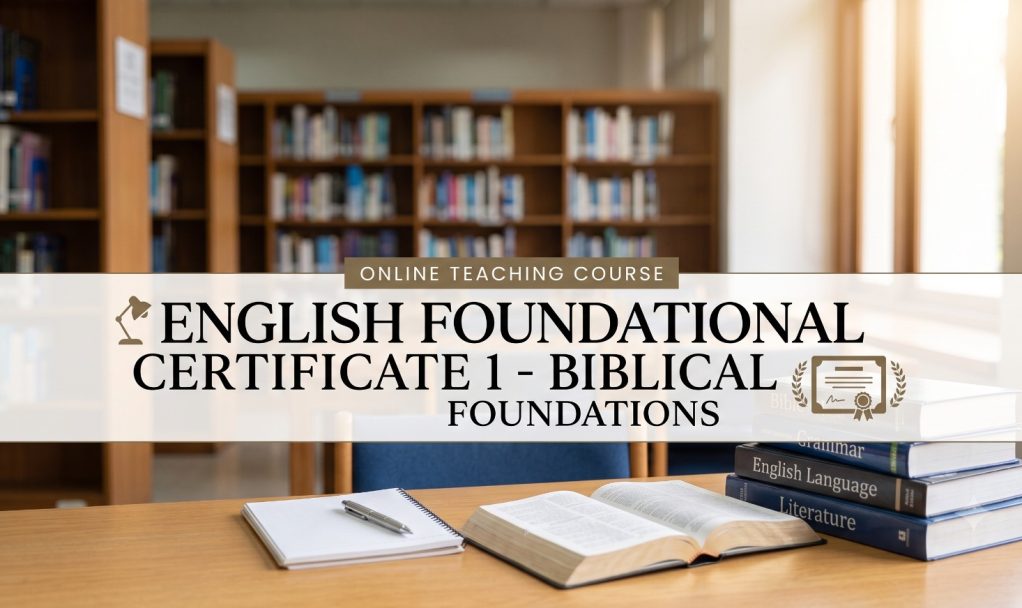
This course offers a brief survey of two major biblical themes, examining the administration of God’s kingdom and divine covenants, as well as a lesson on the formation of the biblical canon. We will see that the Old and New Testaments are not a random mixture of stories, teachings, and prophetic fragments. Instead, they are unified around the central theme of God’s kingdom administered through covenants. This course is based on Thirdmill video series: “Kingdom, Covenants & Canon of the Old Testament” as well as “Kingdom and Covenant in the New Testament,” which were produced by Third Millennium Ministries and presented by Dr. Richard L. Pratt, Jr. and Dr. Simon Vibert.
This online course will equip you to intelligently discuss how the Bible is relevant despite the scientific claims and make sense of the Christian faith today. THEOn (Theology Online) delivers the course content to you through its e-learning platform and facilitates a cohort for this course.
Previews are available for:
Lesson 1: Video lectures
Lesson 2: Lecture notes
Lesson 6: Study Guide
You are welcome to preview these contents below under the section on “Course Content”!
COURSE OVERVIEW
This course gives a brief survey of two major biblical themes, examining the kingdom of God and the implementation of the divine covenants, along with a single lesson on the formation of the biblical canon. We will see that the Old and New Testaments are not a random amalgam of stories, teachings and prophetic titbits. Instead, they are unified around the central theme of the kingdom of God, which was administered through covenants. This course is based on Thirdmill video series, Kingdom, Covenants & Canon of the Old Testament, as well as Kingdom and Covenant in the New Testament produced by Third Millennium Ministries and presented by Dr. Richard L. Pratt, Jr. and Dr. Simon Vibert.
Source Material: This course is based on two video series produced by Third Millennium Ministries:
- Kingdom, Covenants & Canon of the Old Testament
- Kingdom and Covenant in the New Testament
Presenters: Dr. Richard L. Pratt, Jr. and Dr. Simon Vibert.
COURSE GOALS, OBJECTIVES AND LIST OF MODULES
Goals
In this course, we would like to accomplish the following:
- We hope you will make use of all the elements of the course to:
- Grasp the unity of the Old and New Testaments, as expressed in the theme of the Kingdom of God;
- Understand the purpose of God in the history of the Old and New Testaments, as expressed in the covenants;
- Discern how their teachings should be applied in our lives today.
- We hope you make changes in your life as a response to the teachings of this course. It should help you interpret and apply passages from the whole Bible.
Objectives
When you have done the following, it will show that these goals are met:
- Obtain satisfactory grades on the quizzes and test, demonstrating that you can identify:
- Key concepts of the Kingdom of God, as expressed in both the Old and New Testaments;
- The key covenants of the Old Testament and explain their relationships to the New Covenant;
- Valid principles for using the Old and New Testaments today.
- Complete the study guides and other assignments of the course, expressing your thoughts and attitudes.
- Participate in weekly discussions that both review and reflect upon the teachings of the videos, in order to more fully understand the concepts and apply them to your life and ministry.
Course Materials
For each lesson, students will be provided with the following resources to ensure a comprehensive learning experience:
- Video Lectures: Core teachings presented by Dr. Pratt and Dr. Vibert.
- Lecture Notes: Outlines and transcripts to accompany the video lectures.
- Study Guide: Reflection questions and key concepts to prepare for discussions, quizzes, and assignments.
Lessons
- Why Study the Olde Testament
- The Old Testament Canon
- Why Study New Testament Theology?
- The Kingdom of God in the New Testament
- The Divine Covenant
- The New Covenant
- The Kingdom of God in the Old Testament
Final Paper Instructions:
- Choose a Question: A few research questions are provided below. Read them carefully and select only one (1) question. It is best to choose a question that most closely relates to your personal life, your profession, or the community work you lead.
- Method of Answering: Your response should not be merely theological facts; rather, it should explain the truths you have learned by connecting them with your own experiences. Express the challenges you have faced, the spiritual clarity you have gained, and your future plans within it.
Evangelism Badge
- Each week, part of your group discussion time should be devoted to working through the Badge document.
- In the first week, part of your discussion time will be spent walking through the Discussion Topics given in the Badge Instructions.
- Once a solid foundation has been laid through the discussion forum, next week would be concentrated on Call to Action.
Course Requirements & Assessments
1. Lesson Quizzes
To ensure comprehension of the core theological concepts, students will complete a short quiz at the end of each module. These quizzes will cover the video lectures, lesson notes, and study materials, serving as a knowledge check before moving on to the next section.
2. Discussion Forums
Active participation is a core component of this course. To foster deep engagement with the material, a Discussion Forum will be held for every two lessons combined. Students are expected to post their own reflections based on the study guides and meaningfully reply to their peers.
3. Final Paper Submission
At the end of the module, students will submit a comprehensive Final Paper. This paper will require students to synthesize the concepts of the kingdom of God, divine covenants, and the biblical canon, demonstrating how these themes unify the Old and New Testaments.
4. Evangelism Badge (Practical Ministry Component)
This course requires the completion of an Evangelism Badge, which serves as the practical application of your theological learning. You will take the biblical foundations you have learned and apply them practically by crafting and sharing your personal testimony and the Gospel message.
Grading Breakdown
- Lesson Quizzes: 25%
- Discussion Forums: 25%
- Final Paper Submission: 30%
- Evangelism Badge (Practical Content): 20%
Completion Certification
On scoring 50% in the final quiz, you are eligible to receive a certificate.
Meet Your Instructor
Mr. G. Philip Matthew is a theological educator and an Assistant Pastor at AG Church. He is deeply dedicated to teaching and preaching within the Christian community, with a central focus on discipling individuals who are committed to active ministry. His academic background bridges both the technical and theological disciplines; he holds a Bachelor of Engineering in Electronics and Communication, as well as a Integrated Master of Theology in Church History from the South Asia Institute of Advanced Christian Studies (SAIACS). For further inquiries or correspondence regarding the course, he can be reached via email at philipm@theon.in.
Curriculum
- 9 Sections
- 21 Lessons
- 10 Weeks
- Course syllabus2
- Week 1: Lesson -1: Why Study the Old Testament?4
- Week 2: Lesson - 2: The Old Testament Canon4
- Week 3: Lesson - 3: Why Study New Testament Theology?4
- Week 4: Lesson - 4: The Kingdom of God in the New Testament4
- Week 5: Lesson - 5: The Divine Covenant4
- Week 6: Lesson - 6: New Covenant4
- Week 7: Lesson - 7: The Kingdom of God in the Old Testament3
- Final Test1
